
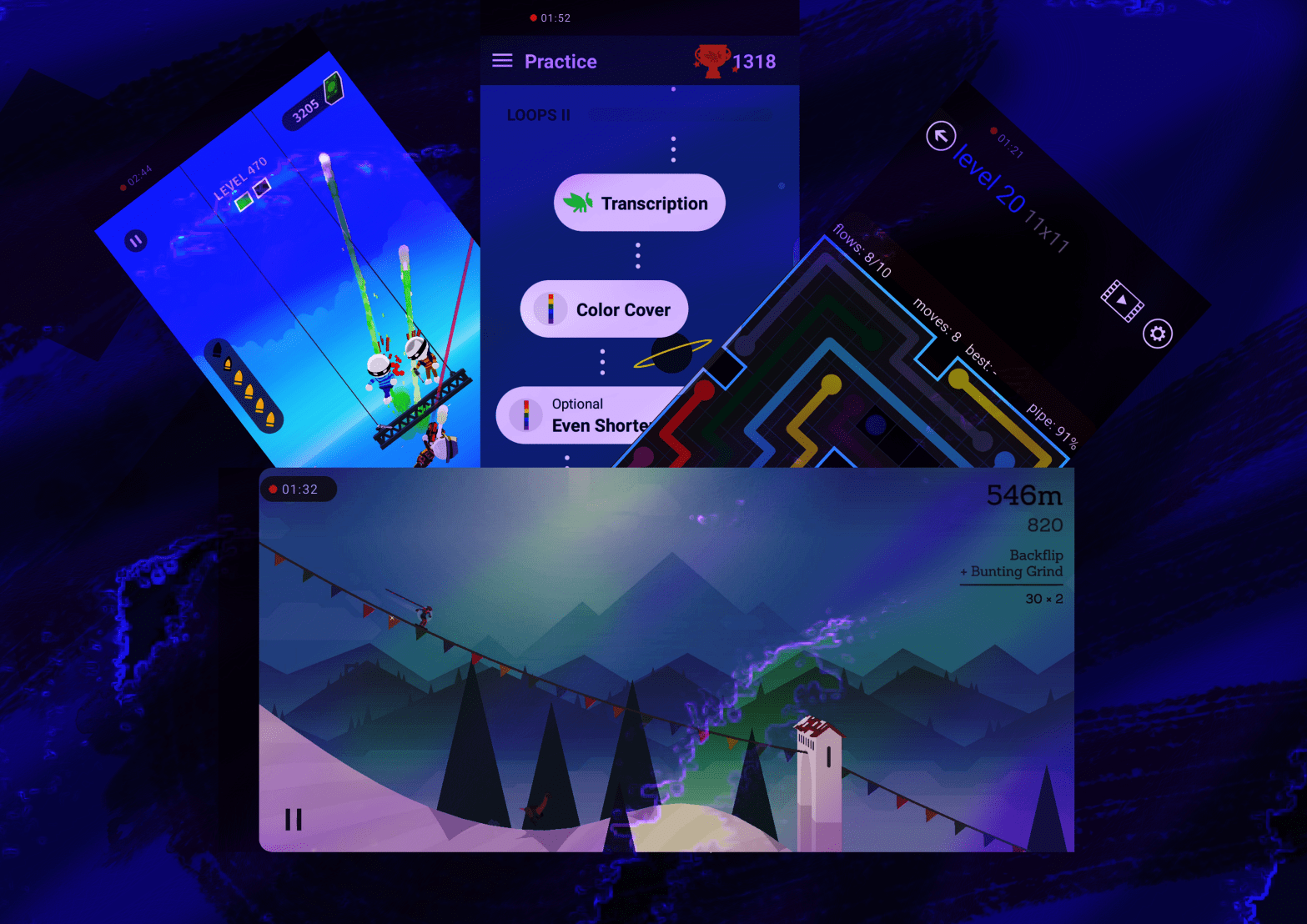
It’s not all micro-transactions and pay walls.
I recently received a new phone as a gift and one of the things I tend to do on a new phone, as a benchmark, is to play games I’m used to. This allows me to see what the improvements from the previous device are.
For this phone I made a change to my routine. I picked up some newer games that I hadn’t tried based on in app advertising and Google Play recommendations. In the end, I was reminded of the problem of monetising free games.
Also, since socialising with other oxygen dependent mamals is not currently de rigueur, this post is rather timely.
The ‘Odd-yssey’ begins
So the games were chosen based on the following criteria:
- The games must be free. No free trials or free with subscriptions.
- The games must be small. I want to be able to have space for my other apps.
- No unnecessary permissions (With the exception of one game I picked out of curiosity). I would like to keep my identity, thank you very much.
- The game must have a ‘goal’. It mightn’t be a specific tangible goal. It could be from unlocking all the characters to finishing a bunch of levels. I have to have an end state.
In the end. I installed five games and a thing. One game I’ve played before, the rest were completely new experiences. . .
. . .
Okay I’m stretching the truth on completely new.
Alto’s Ski Free

Alto’s Journey is a downhill snowboarding runner with ramps , boulders and a terrifying monstrous being coming down the slope to incapacitate you. Out side of these things, there are very few things that compare to the desktop time killer Ski Free.
It’s a 2D side-scroller that includes tricks as thrilling as the backflip, grinding, jumping crevasses and doing loop-the-loops in a wingsuit.
The in-stage objective is to catch llamas. The sub-objectives differ from player level to player level.
Now, the good. It is a fun game admittedly. There are two “buttons” keeping gameplay intuitive and immersive from a control standpoint; it is not, “Press to jump”, it’s simply jump. The challenge becomes a matter of timing, control and restraint.
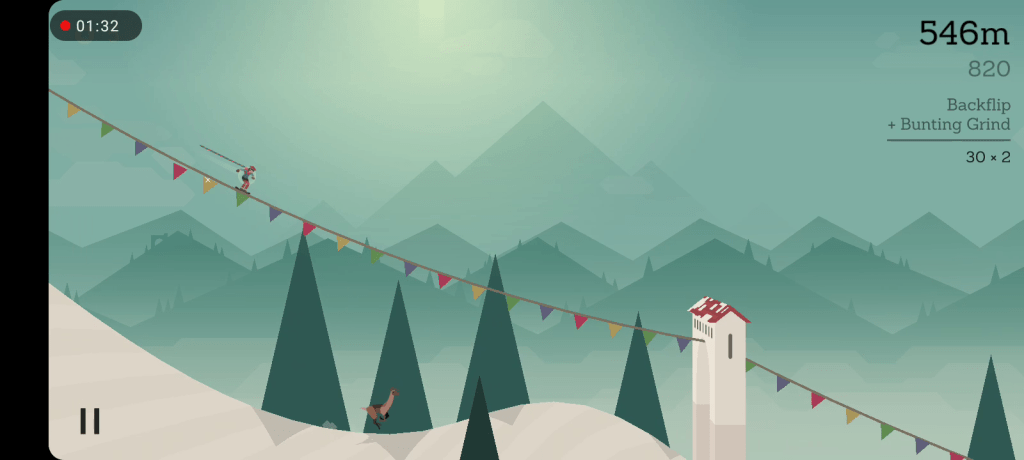
It is a very pretty game. The day-night cycle; Peruvian aesthetic; blocky, line-free art style and smooth animation (seems like Inverse Kinematics but I could be wrong) gives this game a really gorgeous ambiance.
The music is sublime. Minimal in composition (not minimalist in the classical sense), the tracks bring a somewhat heroic or adventurous bent to the misadventures of a bunch of adrenaline junkie llama herders, a llama and a “forest spirit”.
The subject of characters is were the game starts to slip for me. The characters have little. . . Well. . . Characterisation outside of their bio. The strong point is that it’s made better by the in gameplay characterisation. Alto is the jack of all trades, Maya is the trick-star (she is the most manoeuvrable ) Felipe is the quirky one and Tupa is basically forest Batman. All these differing personalities bring different challenges in control and experience keeping the game fresh.

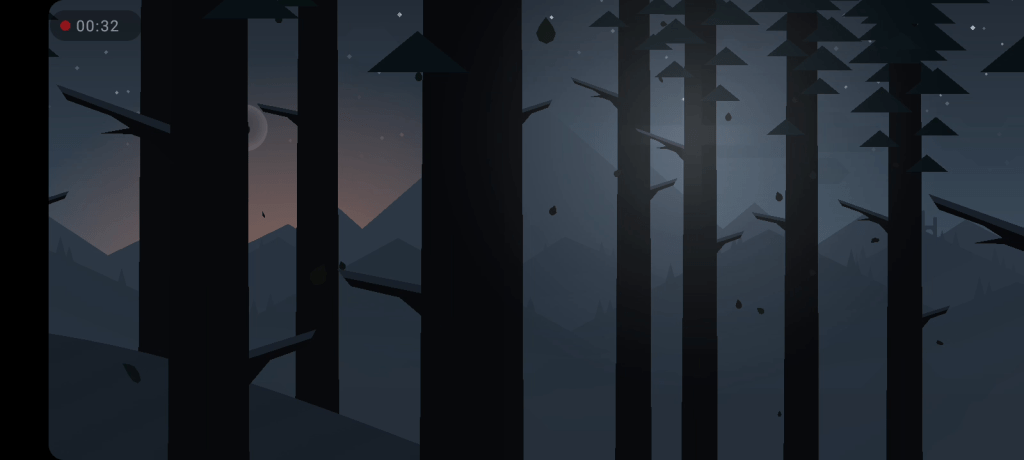
Now, the bad. I love the art-style, I really do, the problem I have is the Day-Night Cycle. The different weather patterns and weather based events bring a fun change to the frosty downhill sliding but come night time, the desaturated scene and black foreground layer makes visibility a challenge for me. I cannot tell the difference between a shrub and a boulder which leads me to make uncertain jumps everywhere and miss out on potential combos .
And there’s the other thing I want to bring up. . . . . . . . . Moving on!
Discount Max Payne
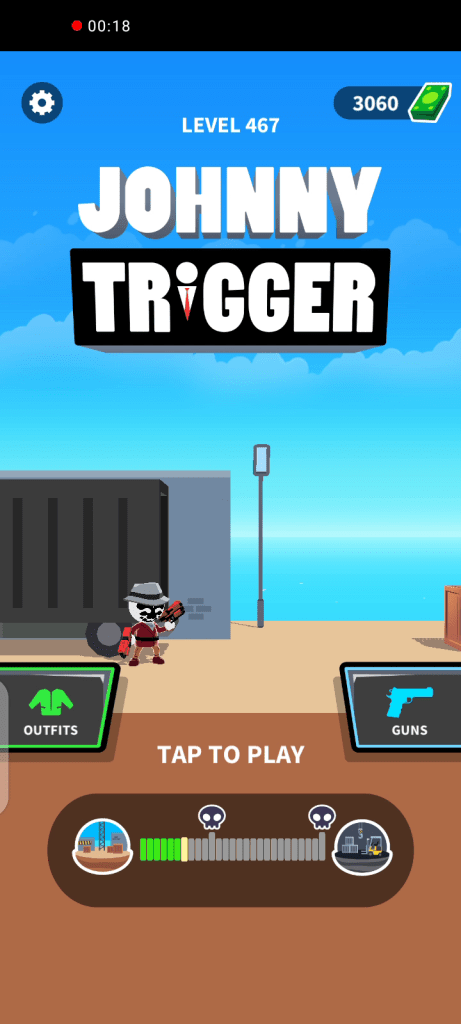
If I were to make a recommendation, it would be to not play Johnny Trigger. It is fun, as any Death March would be. The mechanics are shallow, levels are repetitive and reward; minimal.
It’s basically the same thing over and over again and becomes a drudgery. That and the game blocks your access if you don’t allow media and file permissions. Seems pretty suspicious to me. I suppose it’s to allow for personalised ads but I’m getting ahead of my self.
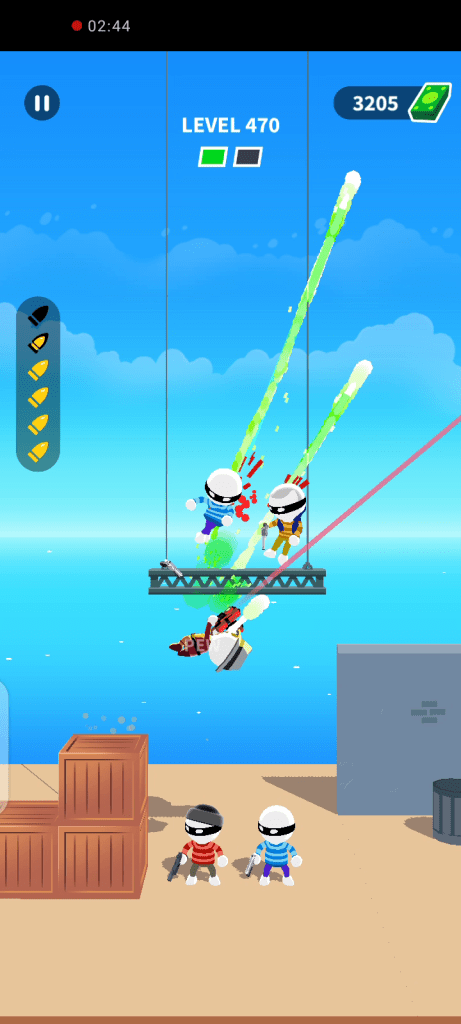
You play as Johnny Trigger, an albino dual wielding gun slinger on a mission to shoot down unscrupulous persons and saving hostages to collect bounties in order to supplement his gun collection and cosplaying addiction. It seems his contract stipulates he can only kill his targets in stylish slow motion parkour set pieces that gets boring after the umm. . . 400th time?
. . .
. . .
. . .
It’s just a game to play on the commode to pass the time.
The Colours are Flowing!
Another On-The-Bog game that’s fun to play is Flow.

Now, I played the free version which allows for several free packs to unlock in gameplay, or purchase for a small fee.
This game is in a minority due to the fact it’s nearly advertising independent and it is a regular download for me.
I won’t say much about the game because, frankly, it’s a puzzle game. Make lines joining coloured dots (or lettered dots if you’re colourblind) with lines that avoid each other.
It’s a brilliant exercise in pathfinding and I love it. . . a bit too much. . . so much so I needed an intervention to stop me playing it every morning before I got out of bed.

The bad? Well, it is a puzzle game. It will get boring fast if you don’t find any interest in it. Much like Make It True, another logic based puzzle game I picked up, puzzle games and strategy games have a highly depreciating interest curve. As opposed to adventure games and action games, whose interest resurges with changes in difficulty, puzzle games have an initial surge of interest that diminish pretty quickly when the novelty wears off. . . unless, you have a highly addictive personality.
Unless. . .
Does Not Compute
I want to make a bold claim. . .

Euclidea is a bad game and the company only wants your money.
Why? Because it’s a “puzzle game” that makes hints and tutorials obscure enough that it creates a barrier of entry that forces people to purchase hints and plans in order to progress in learning Euclidean geometry, a skill set that would help non-mathematically minded people pick up a mathematics based skill. It’s a luxury, true, but not being able to understand a concept fully should not be a means to ensure monetary solvency. Exciting and intruiging gameplay ensures monetary solvency.

Yes, this comment is angry and heavily biased but still, they raised a complaint that should have been handled with better tact than implying that the user is dumber than a child.
I mentioned Make It True earlier. I would recommend that game over Euclidea any day. It makes learning logical mathematics intutive and fun, allows people to make mistakes and experiment, and keeps game goals easily solvable without having to pay for hints. In fact, it’s easier to earn hints than in Euclidea. What Make it True lacks in polish, it makes up for in simplicity in purpose and accessibility. AND you don’t have to pay for dark mode!
Also, Horis International, this is how you write a reply:
Dear customer, it is unfortunate you didn’t find our application to your liking. The level of complexity at play may cause a high barrier of entry for some but if you stick with it, it might get comfortable over time.
Also, we will take steps to make the concepts easier to understand for new users.
Thank you again for your patronage and we will do our best to take criticism to make our app more fun for all.
Someone with a little more tact.
Feel free to use it.
While we are on the subject of fun learning. . .
Hop, Skip Jump
Grasshopper is a learning tool for learning JavaScript.
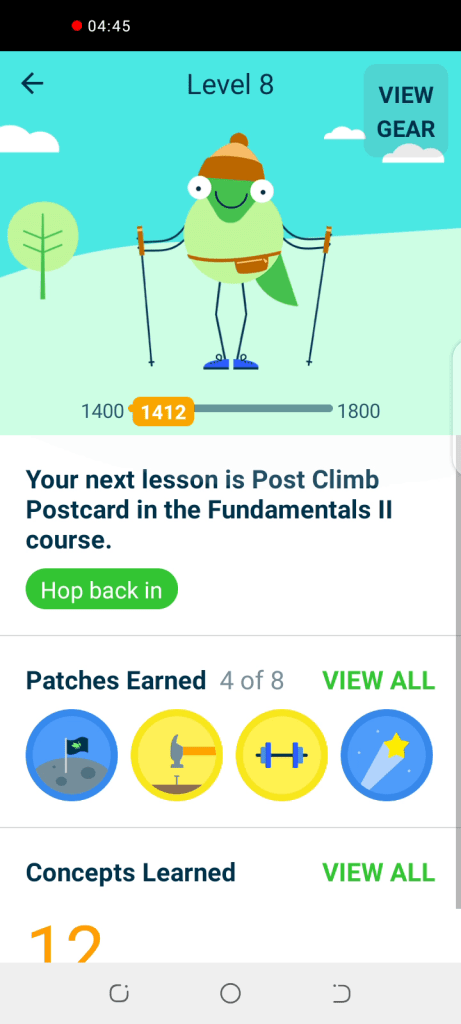
Lets set the scene: I hate JavaScript; I call it a programming eyesore; It’s a junkyard of coding; Grasshopper makes it fun!
It’s witchcraft!
I’ll keep this brief so I can get to my main point.
Grasshopper allows people to pick up complex programming concepts in a metered and relaxed pace. tutorials are thorough and laboured to allow concepts to have better memory rentention.
I don’t have a problem with it, except the fact it’s teaching kids how to use monstercode.
The Crux of the Matter
Okay, I spent a lot this post talking about gameplay and enjoyment, completely ignoring the topic. This is so I can concentrate on what mobile games could be inspite of anti-consumer practices that have been so pervasive that governments started stepping in.
Let’s start with Alto’s Journey. Every action that is not gameplay is potentially monetisable. From retries in the same level, to unlocking skills, to gaining in game currency; everything can be a source of income. What Noodlecake Studios does well with this, and their other title Flow, is allow play as much as possible without having monetisation interupt gameplay. I could concievably complete the whole game without having to watch a single ad or make a payout. That is a good monetisation strategy.
Johnny Trigger is a bit dubious because it expects to access your media before it allows gameplay (unless that’s been patched out, I deleted that thing with the quickness after playing so much. . . and giving myself an intervention). This is either is to allow the storage of extra content (doubtful), to track your phone usage to send personalised ads (probable) or It’s a trojan spyware program syphoning your data(I sincerely hope not). Since, it’s an advertising only model. Well it turns out the greedy guts have an optional subscription model attached recently which makes the game incredibly buggy. The ads also increase the time between play and replay, which can be irritating. Though, I seem to have a high tolerance for that, personally.
Grasshopper has Google money so there is no monetisation. . . yay!
Euclidea is a perfect example of bad monetisation practice. Obscured instructions, hidden features and a hint system as helpful as a handyman on ecstacy. Obtuse for the sake of being obtuse and a very vivid pay wall are not keys for success, they are a shackle to the consumer’s enjoyment of your product.
All this is to say, mobile game development as a medium can work without having to be shackled by bad monetisation practices.
Yes, game studios will need some way of generating income and eventually profits, that is something that I will adamantly encourage. Hopefully, in time as paying customers, we can influence mobile game developers to adopt more non-invasive monetisation strategies that don’t cost gameplay to enjoy.
As game developers, if we can follow a model of keeping ad and payment prompts minimal (like Alto’s Journey and Flow); sticking to an ad only model (Like Johnny Trigger used to do); avoid subscription services or have one time only purchase; or even manage to get Google money (that would be the dream) we could potentially create games we can both be proud of and have the customers’ trust that will keep them playing.
All that’s left is to actually make the ruddy game good in the first place, right, Horis International?
Some things to note: I didn’t play any full 3D games or games that could be considered “hardcore” (if hardcore games are really a thing. . . I’ll get to that some time). Again, I was limited to only advertising recomendations (and the fact that I will NEVER play Raid: Shadow Legends). If I were to do a part two, or a continuing series, I would try more hardcore mobile titles.
Also, I don’t have any ill will for Horis International or SayGames (the makers of Johnny Trigger). My writing is mildy exaggerated due to the time investment I made on these games.
Finally, I do realise this is all just a veiled review of some games I played on my phone while procrastinating. . .
. . .
. . . Shame on me.
 HomeKick Games